

ON THIS PAGE
The right parallel dialer for your team depends on where your prospects are and how many reps will dial. US teams often shortlist Orum, Nooks and Koncert, while Salesfinity and Trellus publish prices a small team can check without a sales call. We compare all six tools below on lines, AI, CRM sync, compliance and pricing.
Skipcall's cold call connect rate benchmarks, built on Cognism data from 200,000 calls, put the average US B2B connect rate at 8-12% on generic data and 18-22% on verified mobile direct dials. Extra lines get your reps to the people who pick up sooner; the phone data you load decides how many pick up at all.
We're Topo, an all-in-one AI sales platform for outbound. We don't sell a dialer, so Topo isn't ranked here. Every claim about a tool comes from that vendor's own website, checked in October 2026, and when a vendor doesn't publish something, we say so.
What is a parallel dialer?
A parallel dialer, also sold as a multi line dialer, calls two or more prospects at once from one rep's seat, and answer detection puts the rep on the first call a person answers. Most cold calls never reach anyone; the tool exists so your reps stop listening to ringtones and voicemail greetings all afternoon. On top of the dialing, most tools now add AI: voicemail and phone-tree detection, transcription, call summaries and automatic CRM logging.
How parallel dialing works
Dial. The rep opens a call list, usually synced from the CRM, and the software rings two to five numbers at once, depending on the tool and plan.
Detect. The software sorts each answered call into a person, a voicemail, a gatekeeper, an IVR menu or no answer. Its speed and accuracy decide whether the prospect hears a rep say hello or a second or two of nothing.
Bridge. The rep gets the first person who answers. Depending on the tool, the other lines hang up or get a voicemail drop, or the tool only dialed them because the rep was free in the first place.
Log. Outcome, recording, transcript and summary go back into the CRM, and the next batch starts.
Steps 2 and 3 carry the trade-off: each extra line buys connects per hour and raises the odds that two people answer at once, leaving one of them on an abandoned call.
Parallel, power and predictive dialers
A power dialer calls one number at a time, back to back, so it never drops anyone and your rep sits through every ring. A parallel dialer rings several numbers for one rep and connects the first person who answers, which is why B2B outbound teams use it. A predictive dialer dials for a whole pool of call-center agents on a statistical guess of who'll be free; of the three, it's the most likely to leave someone in silence.
How to choose a parallel dialer
Feature pages in this category read alike. Once you're in a pilot, five things separate the tools.
1. Extra lines only help if the bridge is fast
Watch the first second of each call. When the dialer is slow to bridge, the prospect says "hello?" into silence and often hangs up, however many lines you run. Ask every vendor:
How many lines can one rep run, and on which plan?
How long between the prospect's greeting and the rep going live? Orum publishes a 0.7-second median for its platform.
What happens when two people answer at the same moment?
If a vendor can't put a number on the second question, measure it during the pilot. Three or four lines with fast detection are a safe place to start.
2. Parallel dialing wears out caller IDs and lists
Parallel dialing burns through caller IDs much faster than manual calling, and once carriers label your numbers "Spam Likely", connect rates fall whatever your line count. Look for local presence, number rotation, spam-flag monitoring and a clear daily cap per number.
Lists wear out too. A rep on four lines chews through a list several times faster than one dialing by hand, which can empty a small or loosely targeted list within days and annoy the same prospects along the way.
3. The dialer should write back to your CRM
It should pull call lists from your CRM and push outcomes back without anyone cleaning up afterwards. Check for native two-way sync with HubSpot, Salesforce, Pipedrive or Attio, then ask exactly which fields the dialer writes back: disposition, recording, transcript, summary, next step.
4. Abandoned-call and do-not-call rules differ in the US, UK and EU
A "TCPA compliant" badge covers US rules only; the UK and EU each have their own. What follows is general information, so confirm the details with counsel for each market you call.
United States. The FTC's Telemarketing Sales Rule sets a safe harbor of no more than 3% abandoned calls out of all calls answered by a person, measured per campaign over each 30-day period. When no rep is on the line within two seconds, it requires a recorded message naming the seller (16 CFR 310.4). The FCC sets the same 3% cap over 30 days for telemarketing calls answered live, with the same two-second threshold (47 CFR 64.1200). The FTC rule exempts many business-to-business calls, so your exposure depends on who you call and what you sell. Keep your internal do-not-call list current either way.
United Kingdom. Ofcom's persistent misuse policy also caps abandoned calls at 3% of live calls, measured per campaign over 24 hours. PECR lets you make live B2B sales calls without prior consent, but the ICO says you must screen numbers against both the TPS and CTPS registers and respect anyone who has objected to your calls.
European Union. GDPR governs how you process prospect data: legal basis, information duties, objections, retention, and where you keep recordings and transcripts. National rules sit on top, and France is the one to watch. Since 11 August 2026, calling consumers for sales requires their prior consent, and the government has retired the Bloctel opt-out register (French Ministry of the Economy). The official guidance addresses calls to consumers, so ask counsel whether and how it applies to your B2B calls, especially to sole traders and very small businesses on your lists.
Before you sign, ask each vendor how the dialer prevents or limits abandoned calls, where it stores recordings and transcripts, and whether you can screen against DNC, TPS/CTPS or your own opt-out list before a session starts.
5. Check seat minimums, billing cycle and add-ons
A few vendors publish per-seat prices. Others only quote after a demo and set seat minimums: Orum's pricing page asks for nine. Annual and monthly prices can differ by 20% or more, and international calling, extra countries and AI features may cost extra.
Parallel dialer comparison table
Tool | Max lines | AI features | CRM integrations | Region / compliance | Starting price | Best for |
|---|---|---|---|---|---|---|
Skipcall | Up to 4 | Voicemail screening, transcripts, AI summaries, voicemail and SMS drop | HubSpot, Pipedrive, Salesforce, Attio (two-way), open API | EU hosting per Skipcall (Scaleway, France); 15 countries on base plans, 160 on request | $70 / €60 per licence/month (Starter, 400 conversations), billed annually, excl. tax | EU and French teams that want published pricing |
Orum | Up to 5 | Detects humans, screeners, voicemail and phone trees in 20+ languages | HubSpot, Salesforce | US/Canada plus international calling | On request (nine-seat minimum) | US teams dialing at volume |
Nooks | Not published | AI dialer, AI sequencing, signals, battlecards, coaching | Salesforce, HubSpot | Not published | On request | Teams wanting dialer, coaching and signals in one tool |
Koncert | 1-4 (Symphony), 1-5 (Symphony+) | Voicemail and phone-tree filtering, objection detection, summaries | Salesforce (AppExchange), HubSpot | SOC 2 Type II; TCPA and GDPR badges | On request | Salesforce-centric teams with security reviews |
Salesfinity | Up to 5 | Parallel dialer, AI sequencer, Slack agent, live assist, call scoring | HubSpot, Salesforce | SOC 2 Type II; ISO 27001 and GDPR "in progress" | $249 per licence/month (Gold); $299 (Enterprise) | US teams that want five lines and a public price |
Trellus | Not published | Live AI coaching during calls | Runs inside HubSpot, Salesforce, Attio | SOC 2 Type II | $149.99/month (Power + Parallel plan) | Reps who want to dial from inside the tools they already use |
Source: each vendor's website, checked October 2026.
The 6 best parallel dialers
1. Skipcall
Skipcall is a business phone system with power dialing, parallel dialing, sequences and a mobile app.
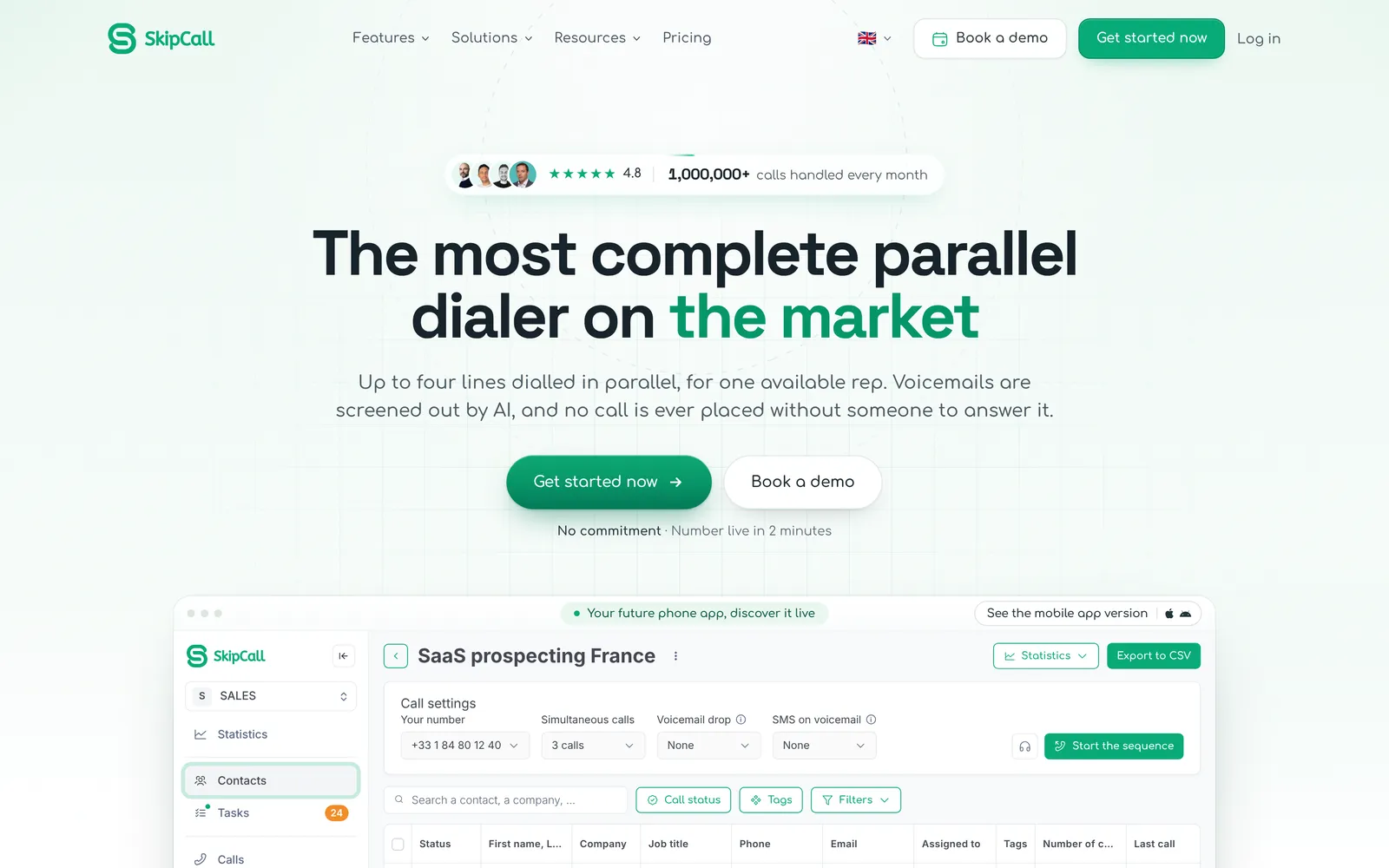
Skipcall's parallel dialer, with simultaneous calls set per session (source: skipcall.io)
Each rep can run up to four lines, and Skipcall says it only dials when a rep is free, to avoid abandoned calls. Voicemail screening, transcripts, AI summaries and voicemail drop are included, along with two-way sync for HubSpot, Pipedrive, Salesforce and Attio. According to Skipcall, Scaleway hosts its customer data in the EU.
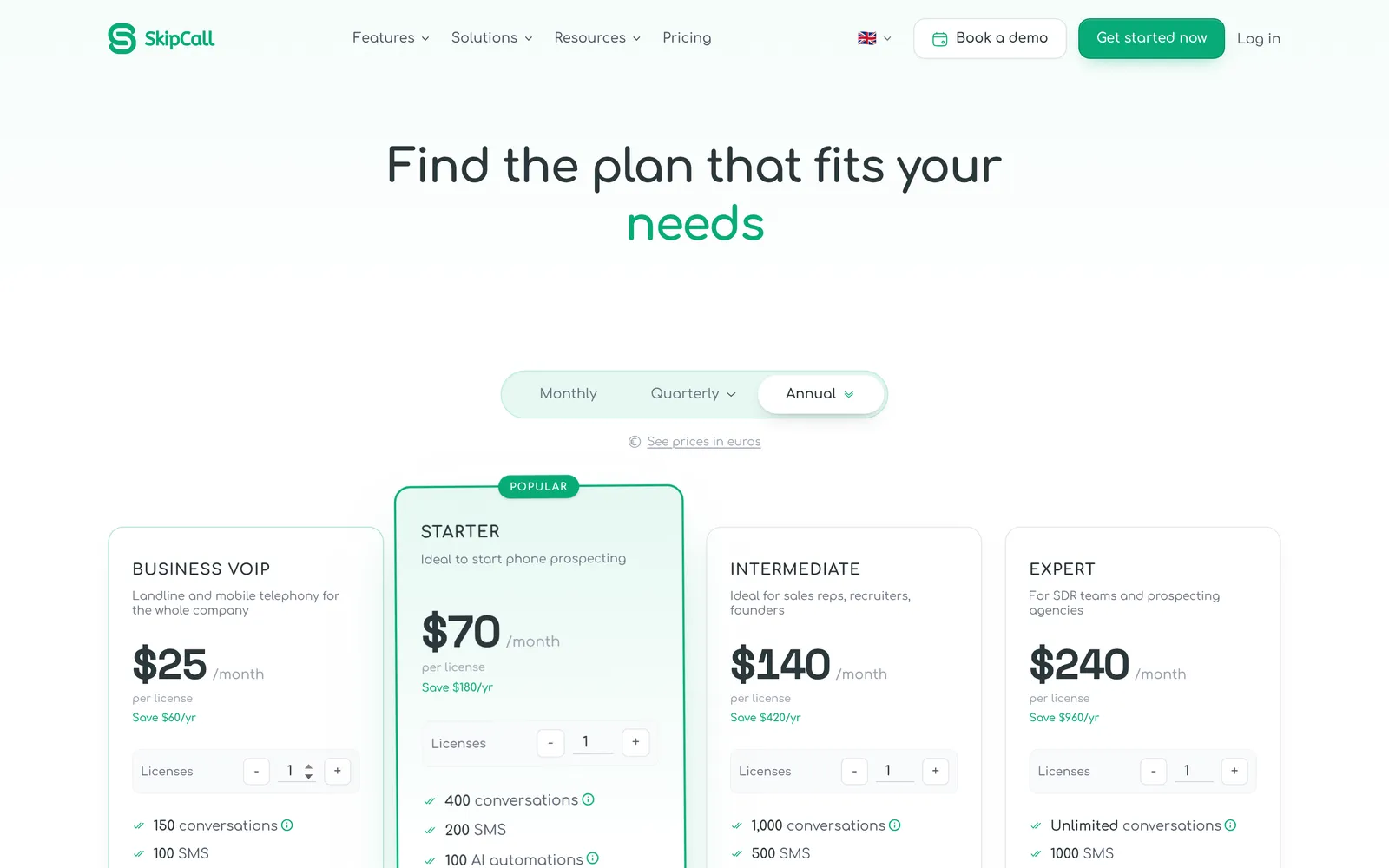
Skipcall's published plans, shown here in US dollars with annual billing (source: skipcall.io/en/pricing)
Pricing. Published per licence per month, excluding tax. Starter is $70 / €60 billed annually for 400 conversations; Expert, unlimited, is $240 / €210.
Watch-outs. Four lines is one fewer than Orum, Koncert (on Symphony+) or Salesfinity offer. Lower plans cap conversations, so heavy dialers may need Expert at more than three times the Starter price. US teams should check local presence for their area codes.
2. Orum
Orum, a US vendor, sells a dialer branded Operator that runs up to five lines, per Orum's dialer page.
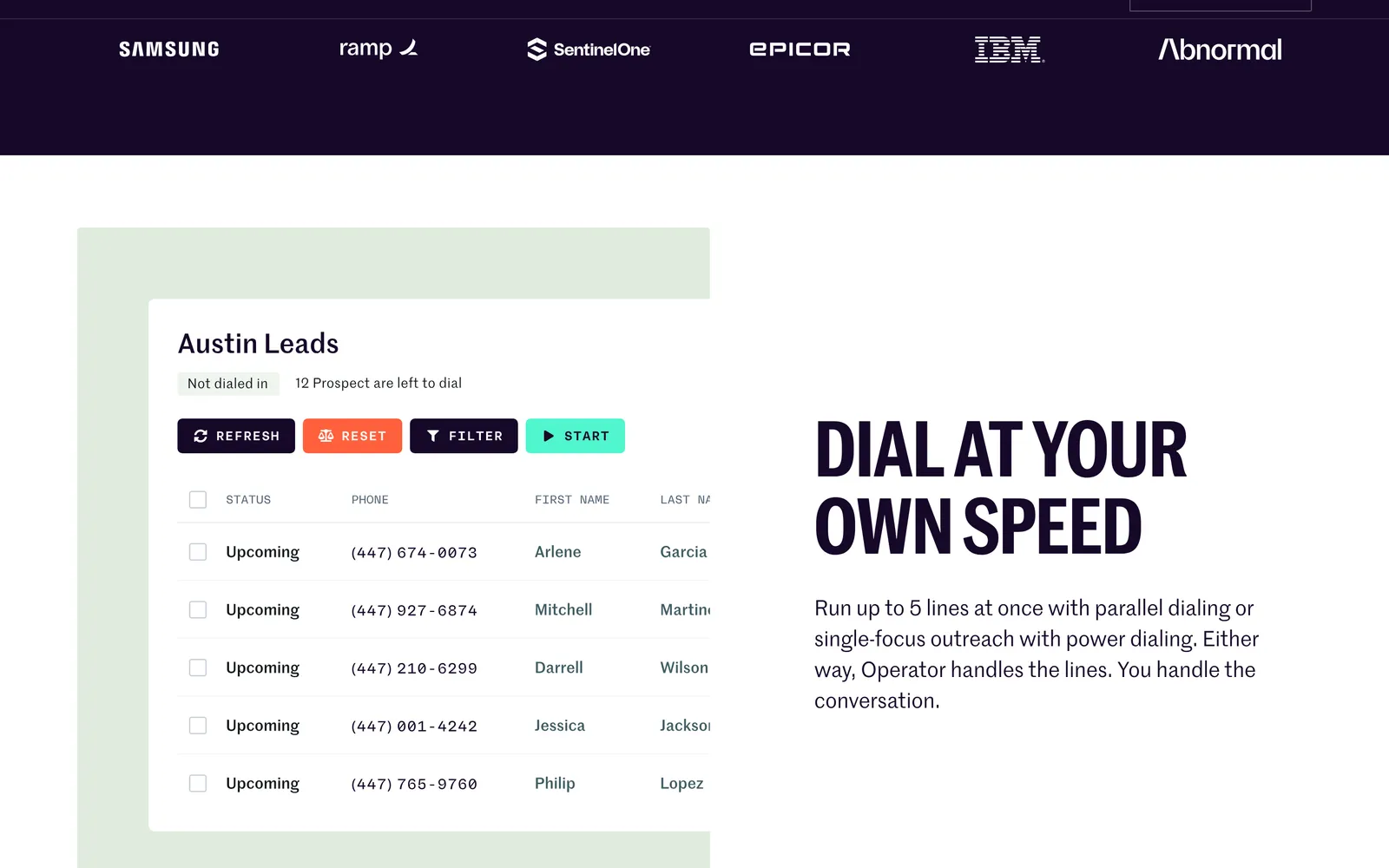
Orum's call list view, with up to 5 parallel lines (source: orum.com)
According to Orum, Operator recognizes humans, call screeners, voicemail and phone trees in more than 20 languages and bridges the rep in with a median connect time of 0.7 seconds. It integrates with HubSpot and Salesforce.
Watch-outs. You won't see a price until you've talked to sales, and the pricing page sets a nine-seat minimum (unlimited dials and AI detection included). That rules out small teams before features even come up.
3. Nooks
Nooks pairs an AI dialer with coaching and pitches the bundle as a workspace for reps.
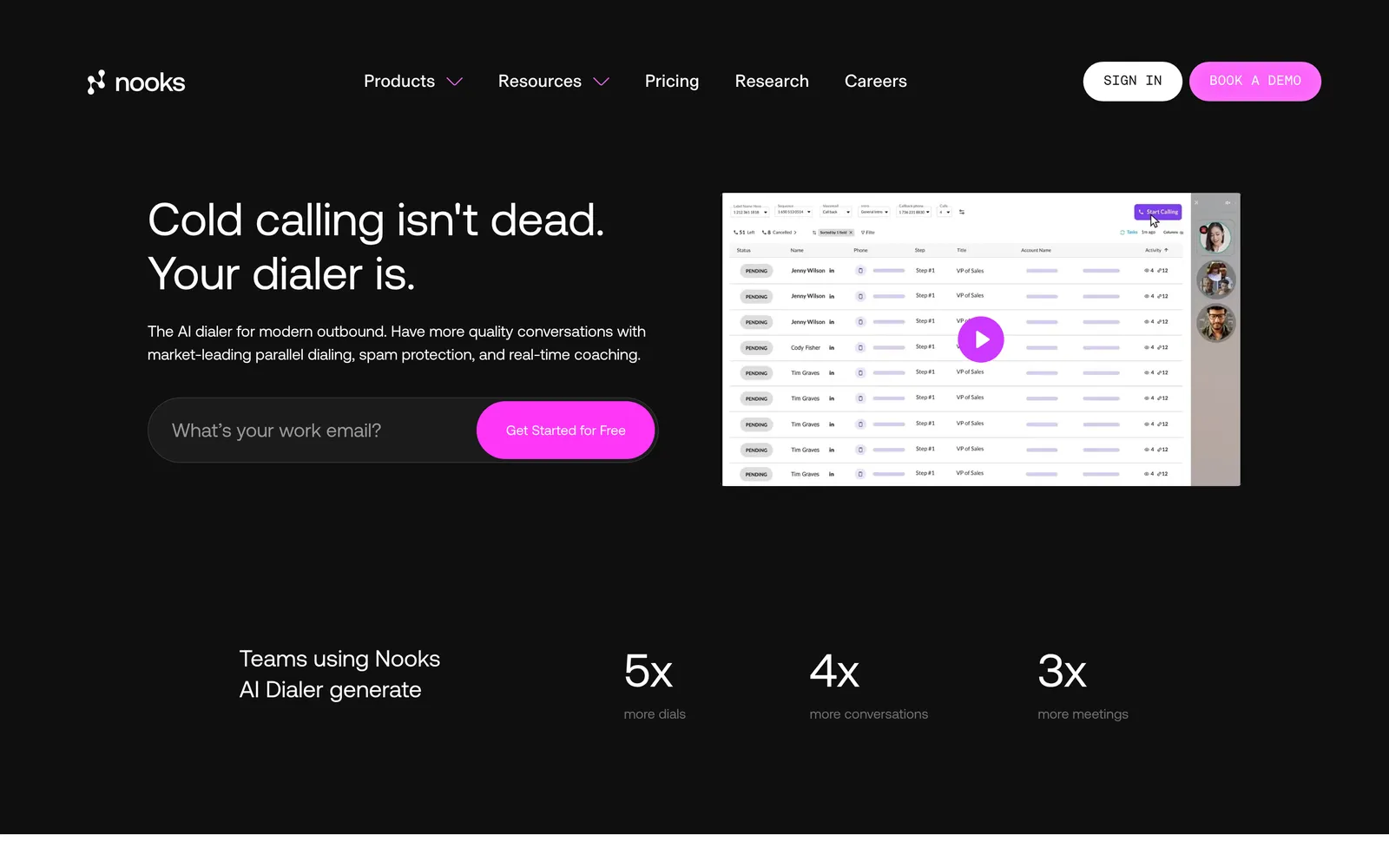
Nooks AI dialer with its call list preview (source: nooks.ai)
According to Nooks, reps get live battlecards during calls, with AI account research, spam protection and coaching around them. It connects natively to Salesforce and HubSpot, and suits teams that want prioritization and coaching in the same tool as the dialer.
Watch-outs. Nooks calls its dialer multi-line without saying how many lines, and pricing is on request. If you already run sequences in another platform, you may end up paying twice for that part.
4. Koncert
Koncert sells parallel dialing in two products, Symphony and Symphony+, and has a strong Salesforce footprint (it's listed on AppExchange).
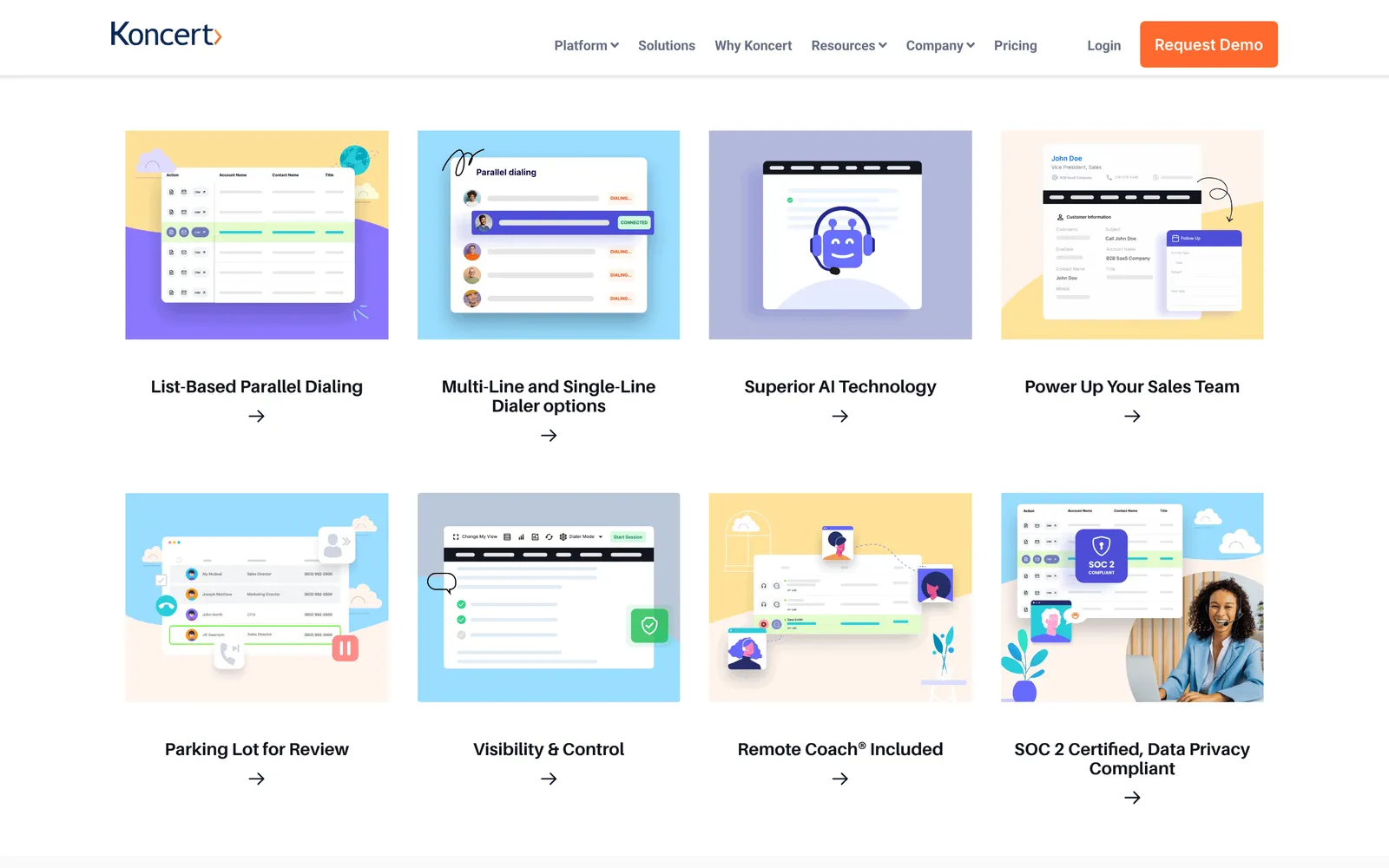
Koncert's dialer features, from parallel dialing to remote coaching (source: koncert.com)
Koncert's pricing page lists one to four lines on Symphony and one to five on Symphony+. The dialer filters out busy tones, fax tones, bad numbers, phone trees and voicemail, and Symphony+ adds objection detection, summaries and transcriptions. Koncert integrates with Salesforce and HubSpot, and its site shows SOC 2 Type II, TCPA and GDPR badges.
Watch-outs. Pricing is on request. The fifth line and the AI features both sit on Symphony+, so confirm which tier your quote covers before comparing it with anyone else's.
5. Salesfinity
Salesfinity runs up to five lines, according to its site, and skips voicemail and busy lines.
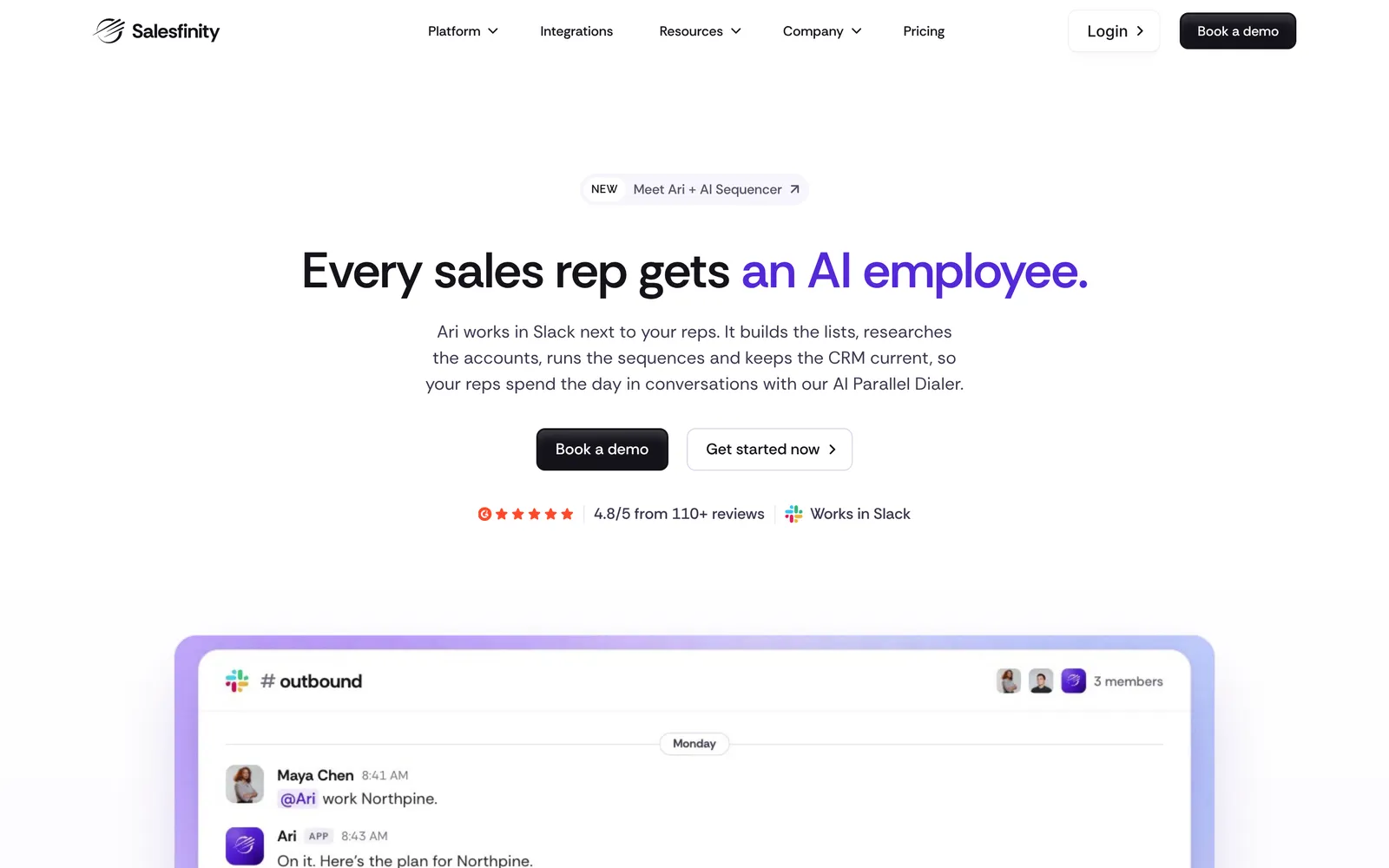
Salesfinity's Ari agent working from a Slack channel (source: salesfinity.ai)
The AI side covers Live Assist for objections during calls, call scoring and practice, AI list building and drafted follow-ups. It integrates with HubSpot and Salesforce.
Pricing. Published on the website. Gold, the calling plan, is $249 per licence per month. Enterprise costs $299 per licence per month on a 12-month plan and adds an AI sequencer, Live Assist and Ari, an agent that works from Slack. US and Canada calling is included; calling to 120+ countries adds $50.
Watch-outs. Several AI features, Live Assist among them, are Enterprise only. Salesfinity holds SOC 2 Type II and lists ISO 27001 and GDPR as "in progress", which European teams should weigh along with the international calling add-on.
6. Trellus
Trellus is a browser extension that runs inside the tools your reps already work in: CRMs such as HubSpot, Salesforce and Attio, and sales engagement platforms such as Outreach and Salesloft. Reps power dial or parallel dial from there.
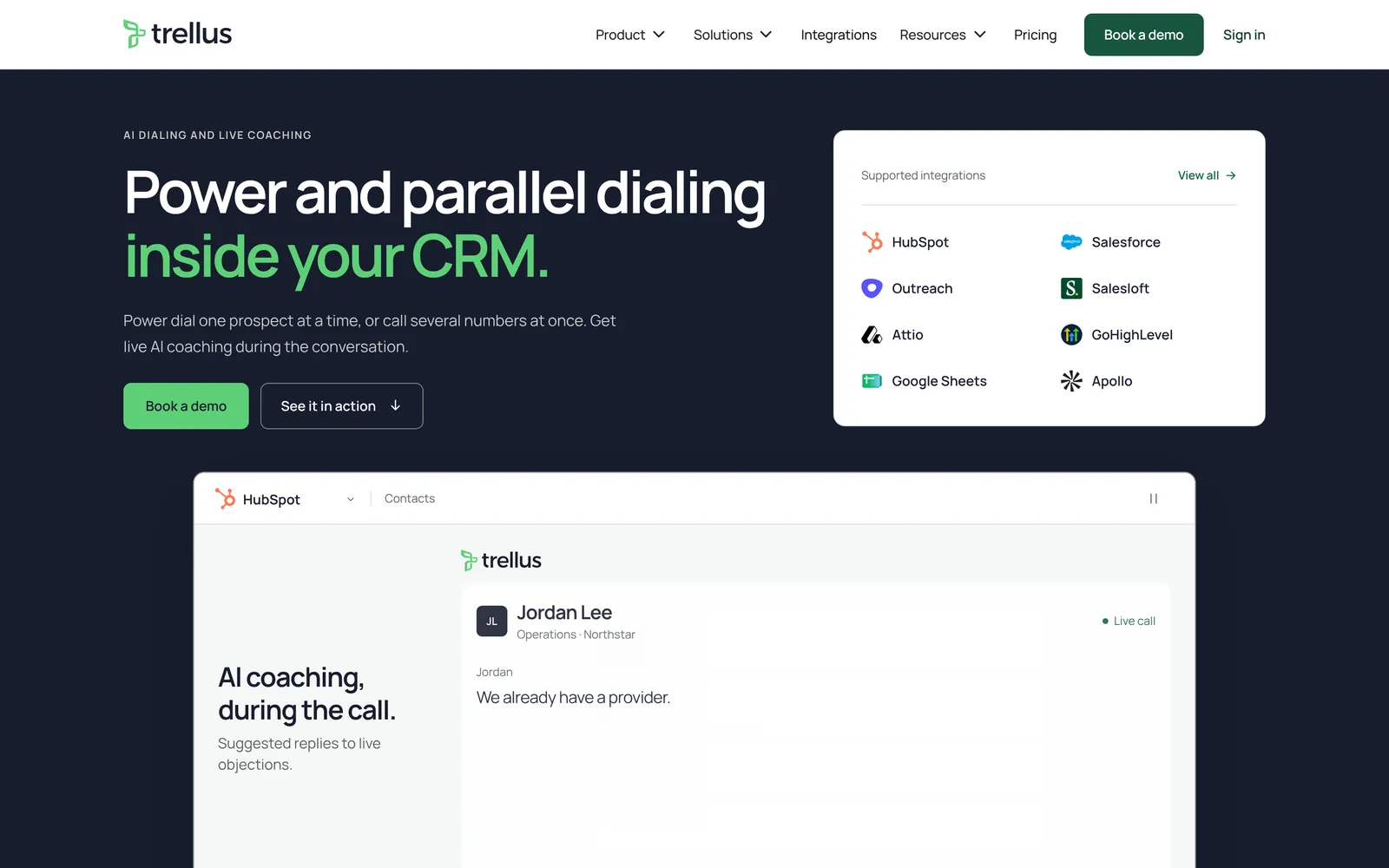
Trellus running inside HubSpot with live call coaching (source: trellus.ai)
During a call, its AI coaching suggests replies to objections as they come up. Trellus lists SOC 2 Type II.
Pricing. The pricing page shows $99.99 per month for the Power plan and $149.99 per month for Power + Parallel, without saying whether that's per user.
Watch-outs. Trellus doesn't publish how many lines the parallel mode runs. An extension also depends on the host tool's interface, so test it on your exact setup before rolling it out to the team.
Prepare the list before a parallel dialing session
The risk with a parallel dialer is a rep who lands on a call unprepared. The connect happens within a second or so, the prospect is already saying hello, and there's almost no room to recover from a fumbled opening. Since the dialer decides which call connects, you can't prepare call by call. The preparation has to happen upstream, on the list.
That takes rigor before the session starts: a clean list, people qualified against your ICP, and a reason to call every single one of them. Data counts as much. Verified mobile direct dials connect at roughly twice the rate of generic data in the benchmark from the introduction, so a stale list loaded into a five-line dialer mostly reaches voicemails and wrong numbers faster, while your caller IDs pick up spam flags.
Topo does that upstream work. It's an all-in-one AI sales platform for outbound, with AI agents working by your reps' side: your team sets the strategy, and the agents build and prepare the lists worth dialing. Topo creates the call tasks, context included, and your dialer places the calls.
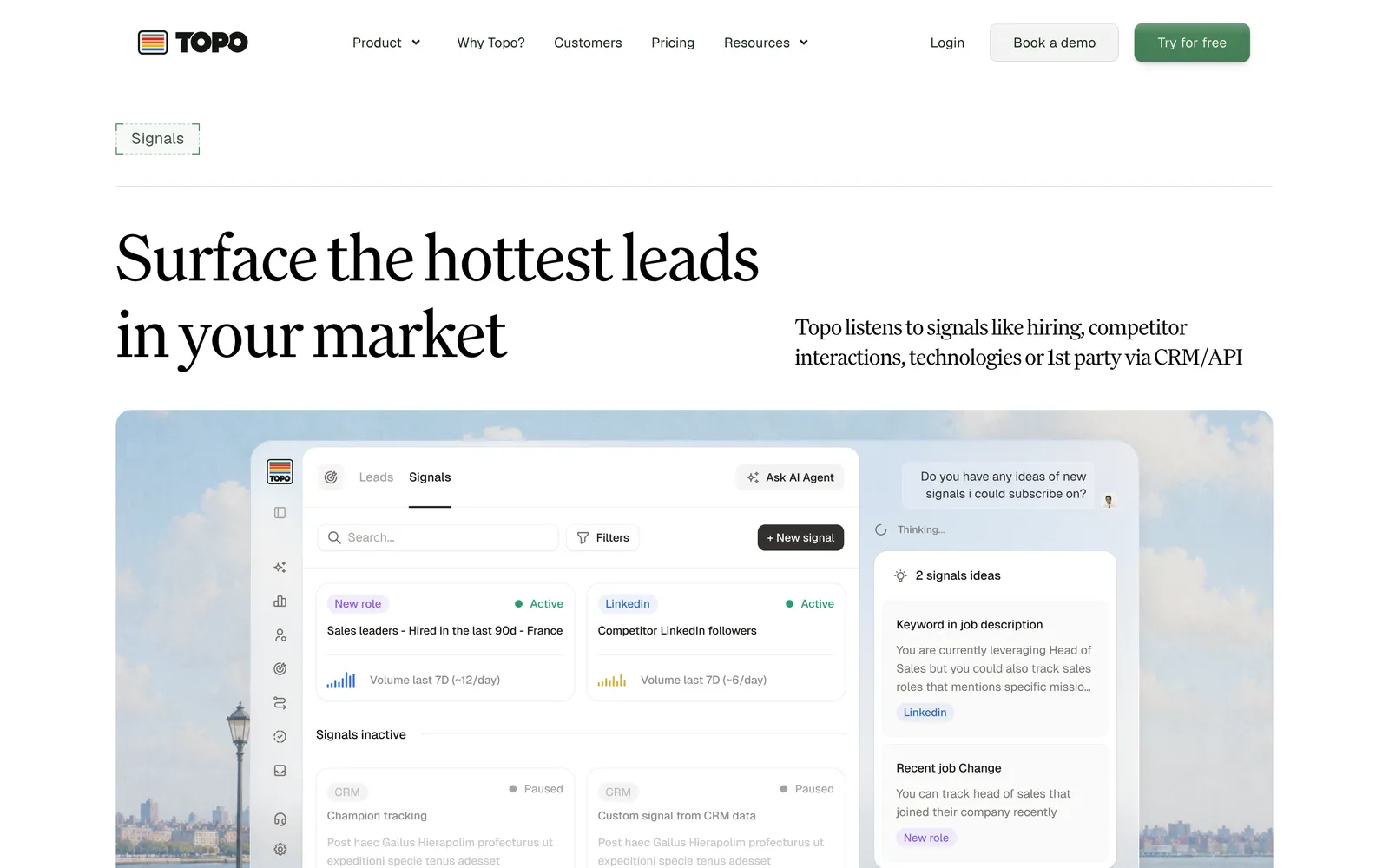
Topo's signals view, where reps pick up accounts with a reason to call (source: topo.io)
A reason to call, written in the task. Each person lands on the list because of a buying signal, such as a new sales hire, a funding round or a new follower of a competitor, and Topo writes that signal into the call task. When the line connects, the rep glances at one sentence and knows why they're calling. That's the whole idea behind warm calling.
Qualified before they reach the list. Topo's lead search checks each person against your ICP, then runs waterfall enrichment across 15 providers for verified emails and phone numbers.
Split and assigned your way. Cut the list by region, segment or rep, assign each slice, and prepare it the way your team works.
Calls inside the sequence. Call tasks sit in multichannel sequences next to email and LinkedIn steps. Topo keeps account context and CRM fields in sync, so the follow-up email reflects what the prospect said on the call.
Reps approve. Topo's AI agents work in copilot mode: they draft and propose, and nothing goes out until a rep approves it.
If you're rebuilding your calling motion, our cold calling guide covers scripts and timing, and you can start a free trial to see how Topo prepares a call list.
Which parallel dialer should you pick?
US teams dialing at volume should shortlist Orum (five lines, nine-seat minimum) and Nooks (signals, battlecards and coaching in one tool). Salesforce shops with strict security reviews can add Koncert, which sits on AppExchange and shows SOC 2 Type II. Small teams that want a public price can compare Salesfinity ($249 per licence per month on Gold, five lines) with Trellus ($149.99 per month for Power + Parallel, inside your CRM). If you sell in Europe or the UK, compare where each vendor keeps your data and whether it bills in euros; the table shows what each one publishes.
Whichever you shortlist, run a two-week pilot with two reps on the same list segment and track connect rate, conversations per hour, meetings booked and spam-flag incidents. Dial counts alone will flatter every tool.