
Hot takes

Apollo.io vs ZoomInfo: The Pragmatic Showdown for SMBs (2024)

5 minutes

Dec 5, 2025

Pierre Dondin

Apollo.io vs ZoomInfo: The 30-Second Verdict

Choosing between Apollo.io and ZoomInfo can feel like picking your favorite shade of beige. Both are giants in the sales intelligence software space, but they serve different masters. If you’re in a hurry, here’s the pragmatic showdown in a nutshell.

Attribute

Apollo.io

ZoomInfo

Best For

Startups, SMBs, and individual reps on a budget

Mid-market to large enterprises with complex sales needs

Pricing Model

Freemium model with affordable paid tiers; per-user pricing

Custom enterprise packages; often requires annual contracts

Data Accuracy

Generally good, but can be inconsistent, especially for enterprise contacts

Industry-leading accuracy and verification processes

Key Strength

All-in-one platform for prospecting, sequencing, and engagement at a low cost

Massive, highly accurate B2B database with deep filtering

Key Weakness

Data can be less reliable; limited features on lower tiers

High cost and rigid contracts make it inaccessible for smaller teams

Platform Overview: Who Are These Tools Really For?

Before we dive into the nitty-gritty, let's get one thing straight: who are you? Your company size, budget, and sales maturity will likely make this decision for you. Both platforms are powerful, but they’re built with fundamentally different users in mind.

Target Customer Profiles

Apollo.io is the scrappy darling of the startup world and SMB scene. It’s an all-in-one sales intelligence and engagement platform that bundles lead generation, data enrichment, and email outreach into one affordable package. If you’re a small team looking to get your first outbound engine running without breaking the bank, Apollo is your go-to. It’s designed for teams that value speed and convenience over granular perfection.

ZoomInfo, on the other hand, is the enterprise heavyweight. It’s a pure-play sales intelligence platform known for its vast and meticulously verified B2B database. This tool is for larger organizations with established sales processes, bigger budgets, and a critical need for high-fidelity data. If your team lives and dies by data accuracy for complex, account-based marketing strategies, ZoomInfo is likely on your radar.

Apollo.io vs ZoomInfo: Key Differences

Okay, let's pop the hood. A sales tool is only as good as what it helps you accomplish day-to-day. Here’s how Apollo.io and ZoomInfo stack up in the areas that matter most to modern sales teams.

Lead Discovery & Filtering

Both platforms offer robust databases, but their approaches differ. ZoomInfo boasts a massive repository of contacts and company data, with incredibly deep filtering options. You can slice and dice by technographics, buyer intent signals, company attributes, and more. It’s a prospector’s paradise, assuming you have the budget for it. The data is famously accurate, thanks to a combination of AI and human verification.

Apollo also provides a large database with solid filtering capabilities, including job changes and funding alerts. While it’s more than enough for most SMBs, users sometimes report that the data isn't as fresh or accurate as ZoomInfo's, especially in niche industries or enterprise segments. Think of it as getting 85% of the way there for 15% of the price.

Automation & AI Capabilities

This is where things get interesting and where the limitations of traditional data providers start to show. has built-in sequencing, allowing you to automate email and LinkedIn outreach directly within the platform. Its AI helps with writing emails and suggesting optimal send times. It’s a solid step toward automating repetitive sales tasks.

ZoomInfo has also been adding automation features, primarily focused on identifying intent signals and routing leads. Its “Chorus.ai” acquisition brought conversational intelligence into the fold, helping analyze sales calls. However, the core focus remains on providing data, not executing the outreach itself. The automation feels more like an add-on than a core function.

But here’s the real question: is basic sequencing and call analysis true automation? Or is it just a fancier to-do list for your SDRs?

CRM & App Integrations

A sales tool that doesn’t play nice with your CRM is a non-starter. ZoomInfo is built for the enterprise stack and shines here. It offers seamless, robust integrations with major players like Salesforce, HubSpot, and Marketo. Data syncs are reliable, and data hygiene is a priority, which is critical for large, complex organizations.

Apollo.io integrates well with HubSpot, Zoho, and LinkedIn, making it a great fit for the typical SMB tech stack. However, users have reported persistent issues with its Salesforce integration, particularly around data syncing at scale. If your entire GTM strategy revolves around Salesforce, this could be a significant headache and a potential dealbreaker.

Data Quality & Database Size: Does More Always Mean Better?

Let's talk about the elephant in the room: data. ZoomInfo’s reputation is built on the back of its data quality. They invest heavily in verification, and it shows. For industries where having the correct direct dial and verified email is paramount—like finance or high-stakes enterprise sales—ZoomInfo is the undisputed champion. You pay a premium, but you get premium data.

Apollo.io offers a massive database, but the quality can be a bit of a gamble. While many users find it perfectly adequate, others point to higher email bounce rates and outdated contact information. The trade-off is clear: you sacrifice some data fidelity for a much lower price point and an all-in-one feature set. The real question is, how much is your team's time worth when spent cleaning lists and dealing with bounced emails? If you’re considering alternatives, integrated platforms that combine validation, outreach, and CRM tasks may offer a more scalable solution.

Pricing & Contract Transparency: What's the Real Cost?

Here’s where the two platforms are worlds apart. Apollo.io is refreshingly transparent. It offers a generous free plan and paid tiers starting at around $49/user/month. The pricing is straightforward, and you can get started without a lengthy sales process. It’s built for teams that want to move fast and stay flexible.

ZoomInfo operates on a classic enterprise model. Pricing is not public, and you’ll need to contact their sales team for a custom quote. Reports online suggest that annual contracts start in the five-figure range (think $15,000+) and go up from there. They also use a complex credit system that can be restrictive. This model works for large companies with predictable budgets but is a major barrier for most SMBs.

Contract Flexibility & Support

With Apollo, you generally get what you pay for—flexible monthly or annual plans with standard support. With ZoomInfo, you’re signing up for a long-term partnership. This means more dedicated support and onboarding but also means you’re locked into a multi-year contract, which can be a scary proposition for a growing business whose needs might change.

User Experience: What Real Sales Teams Say

Features and pricing are one thing, but what’s it like to actually use these tools every day? We sifted through reviews on G2, Capterra, and Reddit to get the real story.

User Ratings from G2, Capterra, and Reddit

Apollo.io is consistently praised for its user-friendly interface and value for money. Users love having prospecting and sequencing in one place. A common sentiment on Reddit is, “It’s the best bang for your buck, period.” The main complaints revolve around data inaccuracies and occasional bugs with the Chrome extension or CRM sync.

ZoomInfo users rave about the data quality. On G2, reviewers frequently call it the “gold standard” for B2B data. However, the user interface is often described as complex and less intuitive than Apollo’s. The biggest gripe by far is the high price and aggressive, inflexible contract renewal practices, which are a recurring theme in online forums.

Pros, Cons, and Best-Fit Scenarios

So, who wins the Apollo.io vs ZoomInfo battle? It depends entirely on your team's DNA.

When to Choose Apollo.io
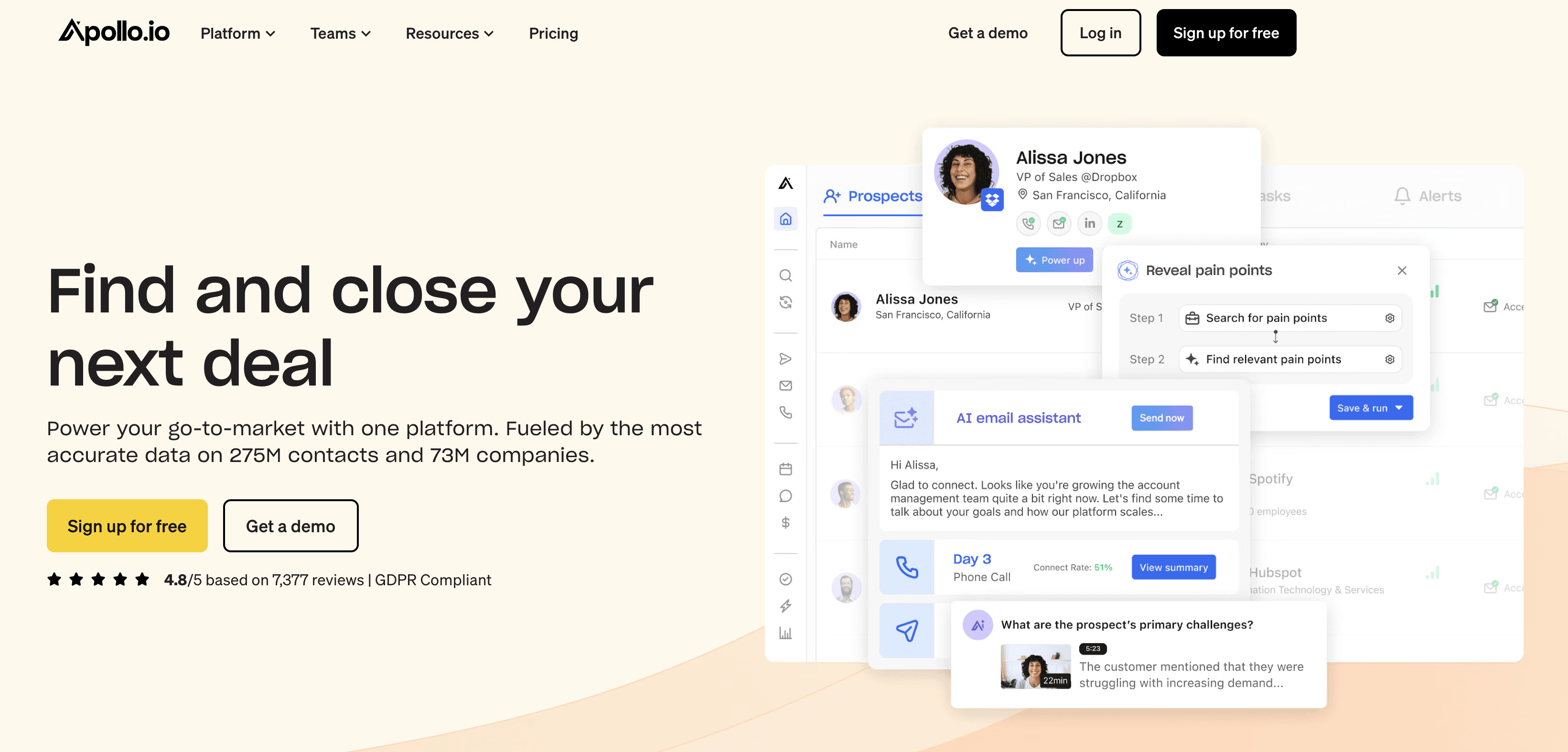

Choose Apollo if you are a startup or SMB that needs an affordable, all-in-one solution to kickstart your outbound sales. If your team values speed and efficiency and is willing to tolerate occasional data inconsistencies in exchange for a powerful, integrated toolset, Apollo is a no-brainer. It’s for the doers, the movers, and the teams that need to build pipeline yesterday. For more on building a quality pipeline, explore B2B prospecting fundamentals and signal-based targeting strategies.

When to Choose ZoomInfo
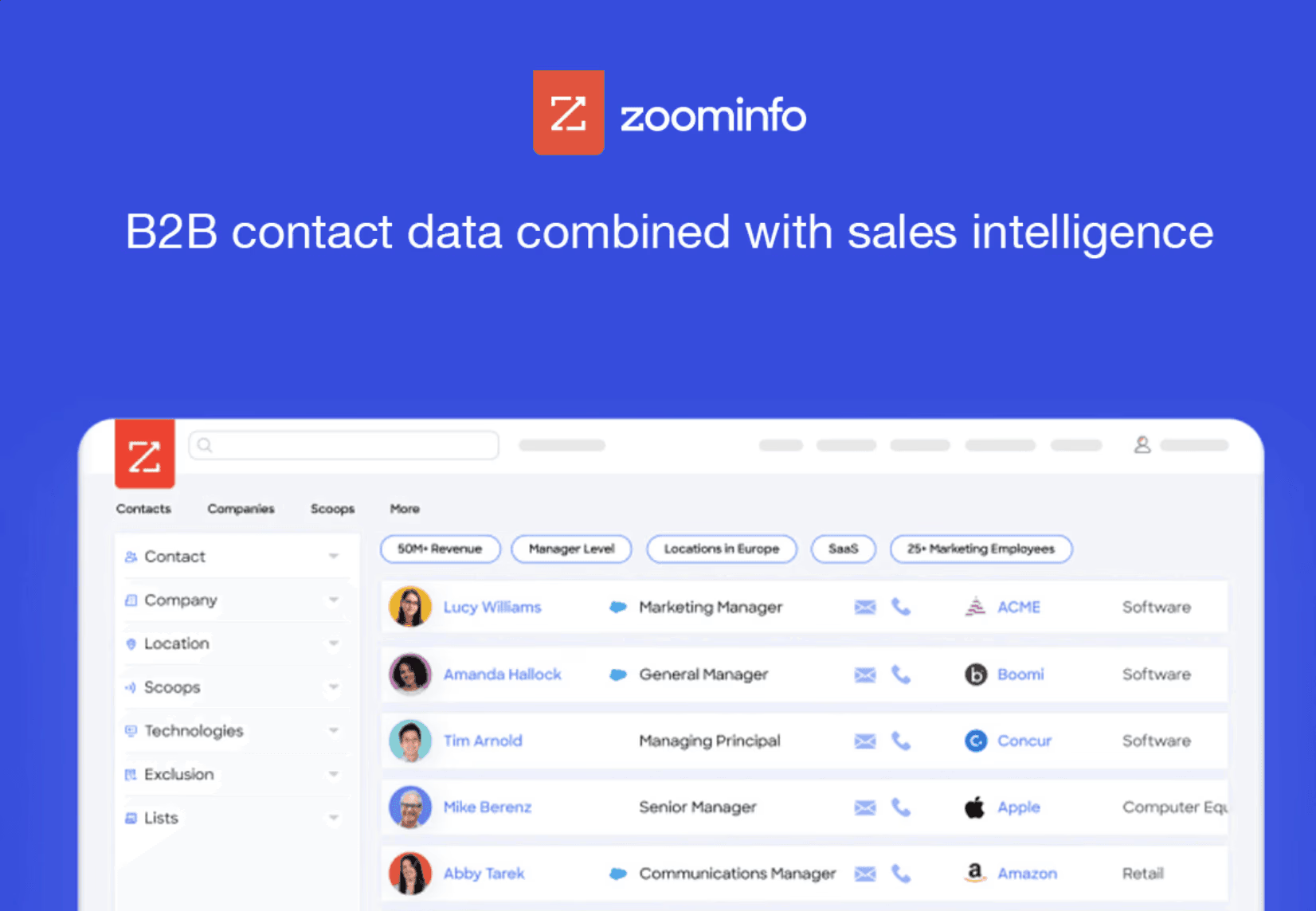

Choose ZoomInfo if you are a mature, mid-market or enterprise company with a significant budget and an unwavering need for the highest quality data. If your sales process is complex, relies on deep account intelligence, and integrates tightly with Salesforce, the investment in ZoomInfo can be justified. It’s for the strategists, the enterprise hunters, and the teams where data precision is non-negotiable.

The Problem with Data Providers: How Topo Takes Outbound to the Next Level

We’ve spent this whole time comparing two excellent data providers. But what if the entire premise is flawed? In 2024, the bottleneck isn't a lack of data; it's the lack of time and resources to activate that data effectively. Buying a massive list is just the first, and frankly, the easiest step. The real work is in the verification, the personalization, the multi-channel outreach, the follow-ups, and the appointment setting. That’s where sales teams burn out.

This is where the conversation needs to shift from data intelligence to intelligent action. Relying on a single, static data source—no matter how accurate—is an outdated model. Customer data changes constantly. A new job, a new funding round, a new tech adoption—these are the buying signals that matter, and they happen in realtime. For a deeper dive into how signal-based sales and multi-signal strategies are replacing volume-based approaches, see how modern teams are evolving their outbound.

Topo vs the Status Quo: From Data Intelligence to Intelligent Action

At Topo, we believe the future of sales isn't just about having data; it's about the synergy between AI and human expertise to execute on it. Topo is an AI execution layer—a full-service growth engine. We don't just sell you a list. We give you a team of AI-powered SDRs that we train on your specific playbook.

Our AI agents handle the entire outbound process: identifying intent signals from multiple sources (not just one!), enriching lead data, running hyper-targeted campaigns, and even booking meetings directly on your calendar. This automates the 80% of prospecting that your team hates, freeing them up to do what they do best: build relationships and close deals.

Instead of just giving you a fishing pole (the data), we give you an automated fishing fleet that brings the fish to your boat (the qualified meetings). We integrate with your CRM and work alongside your team, providing the strategic oversight of a human expert with the relentless efficiency of AI.

If you’re looking to optimize your sales process in 2025, it’s time to move beyond the limitations of traditional sales intelligence. Instead of just buying another data library, it's time to invest in an engine that turns intelligence into revenue. Compare the best sales generator tools for tech companies and see for yourself how Topo can save you time and money while generating high-quality, convertible leads for your business.

Apollo.io vs ZoomInfo: The 30-Second Verdict

Choosing between Apollo.io and ZoomInfo can feel like picking your favorite shade of beige. Both are giants in the sales intelligence software space, but they serve different masters. If you’re in a hurry, here’s the pragmatic showdown in a nutshell.

Attribute

Apollo.io

ZoomInfo

Best For

Startups, SMBs, and individual reps on a budget

Mid-market to large enterprises with complex sales needs

Pricing Model

Freemium model with affordable paid tiers; per-user pricing

Custom enterprise packages; often requires annual contracts

Data Accuracy

Generally good, but can be inconsistent, especially for enterprise contacts

Industry-leading accuracy and verification processes

Key Strength

All-in-one platform for prospecting, sequencing, and engagement at a low cost

Massive, highly accurate B2B database with deep filtering

Key Weakness

Data can be less reliable; limited features on lower tiers

High cost and rigid contracts make it inaccessible for smaller teams

Platform Overview: Who Are These Tools Really For?

Before we dive into the nitty-gritty, let's get one thing straight: who are you? Your company size, budget, and sales maturity will likely make this decision for you. Both platforms are powerful, but they’re built with fundamentally different users in mind.

Target Customer Profiles

Apollo.io is the scrappy darling of the startup world and SMB scene. It’s an all-in-one sales intelligence and engagement platform that bundles lead generation, data enrichment, and email outreach into one affordable package. If you’re a small team looking to get your first outbound engine running without breaking the bank, Apollo is your go-to. It’s designed for teams that value speed and convenience over granular perfection.

ZoomInfo, on the other hand, is the enterprise heavyweight. It’s a pure-play sales intelligence platform known for its vast and meticulously verified B2B database. This tool is for larger organizations with established sales processes, bigger budgets, and a critical need for high-fidelity data. If your team lives and dies by data accuracy for complex, account-based marketing strategies, ZoomInfo is likely on your radar.

Apollo.io vs ZoomInfo: Key Differences

Okay, let's pop the hood. A sales tool is only as good as what it helps you accomplish day-to-day. Here’s how Apollo.io and ZoomInfo stack up in the areas that matter most to modern sales teams.

Lead Discovery & Filtering

Both platforms offer robust databases, but their approaches differ. ZoomInfo boasts a massive repository of contacts and company data, with incredibly deep filtering options. You can slice and dice by technographics, buyer intent signals, company attributes, and more. It’s a prospector’s paradise, assuming you have the budget for it. The data is famously accurate, thanks to a combination of AI and human verification.

Apollo also provides a large database with solid filtering capabilities, including job changes and funding alerts. While it’s more than enough for most SMBs, users sometimes report that the data isn't as fresh or accurate as ZoomInfo's, especially in niche industries or enterprise segments. Think of it as getting 85% of the way there for 15% of the price.

Automation & AI Capabilities

This is where things get interesting and where the limitations of traditional data providers start to show. has built-in sequencing, allowing you to automate email and LinkedIn outreach directly within the platform. Its AI helps with writing emails and suggesting optimal send times. It’s a solid step toward automating repetitive sales tasks.

ZoomInfo has also been adding automation features, primarily focused on identifying intent signals and routing leads. Its “Chorus.ai” acquisition brought conversational intelligence into the fold, helping analyze sales calls. However, the core focus remains on providing data, not executing the outreach itself. The automation feels more like an add-on than a core function.

But here’s the real question: is basic sequencing and call analysis true automation? Or is it just a fancier to-do list for your SDRs?

CRM & App Integrations

A sales tool that doesn’t play nice with your CRM is a non-starter. ZoomInfo is built for the enterprise stack and shines here. It offers seamless, robust integrations with major players like Salesforce, HubSpot, and Marketo. Data syncs are reliable, and data hygiene is a priority, which is critical for large, complex organizations.

Apollo.io integrates well with HubSpot, Zoho, and LinkedIn, making it a great fit for the typical SMB tech stack. However, users have reported persistent issues with its Salesforce integration, particularly around data syncing at scale. If your entire GTM strategy revolves around Salesforce, this could be a significant headache and a potential dealbreaker.

Data Quality & Database Size: Does More Always Mean Better?

Let's talk about the elephant in the room: data. ZoomInfo’s reputation is built on the back of its data quality. They invest heavily in verification, and it shows. For industries where having the correct direct dial and verified email is paramount—like finance or high-stakes enterprise sales—ZoomInfo is the undisputed champion. You pay a premium, but you get premium data.

Apollo.io offers a massive database, but the quality can be a bit of a gamble. While many users find it perfectly adequate, others point to higher email bounce rates and outdated contact information. The trade-off is clear: you sacrifice some data fidelity for a much lower price point and an all-in-one feature set. The real question is, how much is your team's time worth when spent cleaning lists and dealing with bounced emails? If you’re considering alternatives, integrated platforms that combine validation, outreach, and CRM tasks may offer a more scalable solution.

Pricing & Contract Transparency: What's the Real Cost?

Here’s where the two platforms are worlds apart. Apollo.io is refreshingly transparent. It offers a generous free plan and paid tiers starting at around $49/user/month. The pricing is straightforward, and you can get started without a lengthy sales process. It’s built for teams that want to move fast and stay flexible.

ZoomInfo operates on a classic enterprise model. Pricing is not public, and you’ll need to contact their sales team for a custom quote. Reports online suggest that annual contracts start in the five-figure range (think $15,000+) and go up from there. They also use a complex credit system that can be restrictive. This model works for large companies with predictable budgets but is a major barrier for most SMBs.

Contract Flexibility & Support

With Apollo, you generally get what you pay for—flexible monthly or annual plans with standard support. With ZoomInfo, you’re signing up for a long-term partnership. This means more dedicated support and onboarding but also means you’re locked into a multi-year contract, which can be a scary proposition for a growing business whose needs might change.

User Experience: What Real Sales Teams Say

Features and pricing are one thing, but what’s it like to actually use these tools every day? We sifted through reviews on G2, Capterra, and Reddit to get the real story.

User Ratings from G2, Capterra, and Reddit

Apollo.io is consistently praised for its user-friendly interface and value for money. Users love having prospecting and sequencing in one place. A common sentiment on Reddit is, “It’s the best bang for your buck, period.” The main complaints revolve around data inaccuracies and occasional bugs with the Chrome extension or CRM sync.

ZoomInfo users rave about the data quality. On G2, reviewers frequently call it the “gold standard” for B2B data. However, the user interface is often described as complex and less intuitive than Apollo’s. The biggest gripe by far is the high price and aggressive, inflexible contract renewal practices, which are a recurring theme in online forums.

Pros, Cons, and Best-Fit Scenarios

So, who wins the Apollo.io vs ZoomInfo battle? It depends entirely on your team's DNA.

When to Choose Apollo.io


Choose Apollo if you are a startup or SMB that needs an affordable, all-in-one solution to kickstart your outbound sales. If your team values speed and efficiency and is willing to tolerate occasional data inconsistencies in exchange for a powerful, integrated toolset, Apollo is a no-brainer. It’s for the doers, the movers, and the teams that need to build pipeline yesterday. For more on building a quality pipeline, explore B2B prospecting fundamentals and signal-based targeting strategies.

When to Choose ZoomInfo


Choose ZoomInfo if you are a mature, mid-market or enterprise company with a significant budget and an unwavering need for the highest quality data. If your sales process is complex, relies on deep account intelligence, and integrates tightly with Salesforce, the investment in ZoomInfo can be justified. It’s for the strategists, the enterprise hunters, and the teams where data precision is non-negotiable.

The Problem with Data Providers: How Topo Takes Outbound to the Next Level

We’ve spent this whole time comparing two excellent data providers. But what if the entire premise is flawed? In 2024, the bottleneck isn't a lack of data; it's the lack of time and resources to activate that data effectively. Buying a massive list is just the first, and frankly, the easiest step. The real work is in the verification, the personalization, the multi-channel outreach, the follow-ups, and the appointment setting. That’s where sales teams burn out.

This is where the conversation needs to shift from data intelligence to intelligent action. Relying on a single, static data source—no matter how accurate—is an outdated model. Customer data changes constantly. A new job, a new funding round, a new tech adoption—these are the buying signals that matter, and they happen in realtime. For a deeper dive into how signal-based sales and multi-signal strategies are replacing volume-based approaches, see how modern teams are evolving their outbound.

Topo vs the Status Quo: From Data Intelligence to Intelligent Action

At Topo, we believe the future of sales isn't just about having data; it's about the synergy between AI and human expertise to execute on it. Topo is an AI execution layer—a full-service growth engine. We don't just sell you a list. We give you a team of AI-powered SDRs that we train on your specific playbook.

Our AI agents handle the entire outbound process: identifying intent signals from multiple sources (not just one!), enriching lead data, running hyper-targeted campaigns, and even booking meetings directly on your calendar. This automates the 80% of prospecting that your team hates, freeing them up to do what they do best: build relationships and close deals.

Instead of just giving you a fishing pole (the data), we give you an automated fishing fleet that brings the fish to your boat (the qualified meetings). We integrate with your CRM and work alongside your team, providing the strategic oversight of a human expert with the relentless efficiency of AI.

If you’re looking to optimize your sales process in 2025, it’s time to move beyond the limitations of traditional sales intelligence. Instead of just buying another data library, it's time to invest in an engine that turns intelligence into revenue. Compare the best sales generator tools for tech companies and see for yourself how Topo can save you time and money while generating high-quality, convertible leads for your business.

FAQ

Which is better for a small business, Apollo or ZoomInfo?

Apollo.io is generally the better choice for small businesses, startups, and teams on a budget. It offers an affordable, all-in-one platform for prospecting and outreach. ZoomInfo is built for mid-market to enterprise companies with larger budgets who require the highest level of data accuracy.

Which is better for a small business, Apollo or ZoomInfo?

Apollo.io is generally the better choice for small businesses, startups, and teams on a budget. It offers an affordable, all-in-one platform for prospecting and outreach. ZoomInfo is built for mid-market to enterprise companies with larger budgets who require the highest level of data accuracy.

Which is better for a small business, Apollo or ZoomInfo?

Apollo.io is generally the better choice for small businesses, startups, and teams on a budget. It offers an affordable, all-in-one platform for prospecting and outreach. ZoomInfo is built for mid-market to enterprise companies with larger budgets who require the highest level of data accuracy.

Which is better for a small business, Apollo or ZoomInfo?

Apollo.io is generally the better choice for small businesses, startups, and teams on a budget. It offers an affordable, all-in-one platform for prospecting and outreach. ZoomInfo is built for mid-market to enterprise companies with larger budgets who require the highest level of data accuracy.

How accurate is Apollo's data compared to ZoomInfo in 2024?

ZoomInfo is considered the industry leader for data accuracy, investing heavily in verification. Apollo's data is generally good and sufficient for many SMBs, but users report it can be less reliable than ZoomInfo's, leading to potentially higher email bounce rates. It's a trade-off between premium accuracy and affordability.

How accurate is Apollo's data compared to ZoomInfo in 2024?

ZoomInfo is considered the industry leader for data accuracy, investing heavily in verification. Apollo's data is generally good and sufficient for many SMBs, but users report it can be less reliable than ZoomInfo's, leading to potentially higher email bounce rates. It's a trade-off between premium accuracy and affordability.

How accurate is Apollo's data compared to ZoomInfo in 2024?

ZoomInfo is considered the industry leader for data accuracy, investing heavily in verification. Apollo's data is generally good and sufficient for many SMBs, but users report it can be less reliable than ZoomInfo's, leading to potentially higher email bounce rates. It's a trade-off between premium accuracy and affordability.

How accurate is Apollo's data compared to ZoomInfo in 2024?

ZoomInfo is considered the industry leader for data accuracy, investing heavily in verification. Apollo's data is generally good and sufficient for many SMBs, but users report it can be less reliable than ZoomInfo's, leading to potentially higher email bounce rates. It's a trade-off between premium accuracy and affordability.

Is there a tool that does more than just provide data like Apollo and ZoomInfo?

Yes. While Apollo and ZoomInfo are data providers, the real bottleneck is activating that data. Topo acts as an AI execution layer, automating the entire outbound process—from identifying intent signals and enriching leads to running campaigns and booking meetings. It's designed to turn intelligence into revenue, not just give you another list to work through.

Is there a tool that does more than just provide data like Apollo and ZoomInfo?

Yes. While Apollo and ZoomInfo are data providers, the real bottleneck is activating that data. Topo acts as an AI execution layer, automating the entire outbound process—from identifying intent signals and enriching leads to running campaigns and booking meetings. It's designed to turn intelligence into revenue, not just give you another list to work through.

Is there a tool that does more than just provide data like Apollo and ZoomInfo?

Yes. While Apollo and ZoomInfo are data providers, the real bottleneck is activating that data. Topo acts as an AI execution layer, automating the entire outbound process—from identifying intent signals and enriching leads to running campaigns and booking meetings. It's designed to turn intelligence into revenue, not just give you another list to work through.

Is there a tool that does more than just provide data like Apollo and ZoomInfo?

Yes. While Apollo and ZoomInfo are data providers, the real bottleneck is activating that data. Topo acts as an AI execution layer, automating the entire outbound process—from identifying intent signals and enriching leads to running campaigns and booking meetings. It's designed to turn intelligence into revenue, not just give you another list to work through.

Sources and references

Topo editorial line asks its authors to use sources to support their work. These can include original reporting, articles, white papers, product data, benchmarks and interviews with industry experts. We prioritize primary sources and authoritative references to ensure accuracy and credibility in all content related to B2B marketing, lead generation, and sales strategies.

Sources and references for this article


Sources and references

Topo editorial line asks its authors to use sources to support their work. These can include original reporting, articles, white papers, product data, benchmarks and interviews with industry experts. We prioritize primary sources and authoritative references to ensure accuracy and credibility in all content related to B2B marketing, lead generation, and sales strategies.

Sources and references for this article


Sources and references

Topo editorial line asks its authors to use sources to support their work. These can include original reporting, articles, white papers, product data, benchmarks and interviews with industry experts. We prioritize primary sources and authoritative references to ensure accuracy and credibility in all content related to B2B marketing, lead generation, and sales strategies.

Sources and references for this article


Sources and references

Topo editorial line asks its authors to use sources to support their work. These can include original reporting, articles, white papers, product data, benchmarks and interviews with industry experts. We prioritize primary sources and authoritative references to ensure accuracy and credibility in all content related to B2B marketing, lead generation, and sales strategies.

Sources and references for this article